Sleep
How to Sleep Better Using Your Breath (A Full-Day Routine)
Better sleep starts the moment you wake up. A full-day breathing and light routine to lift morning cortisol, wind down at night, and fall asleep using your breath.
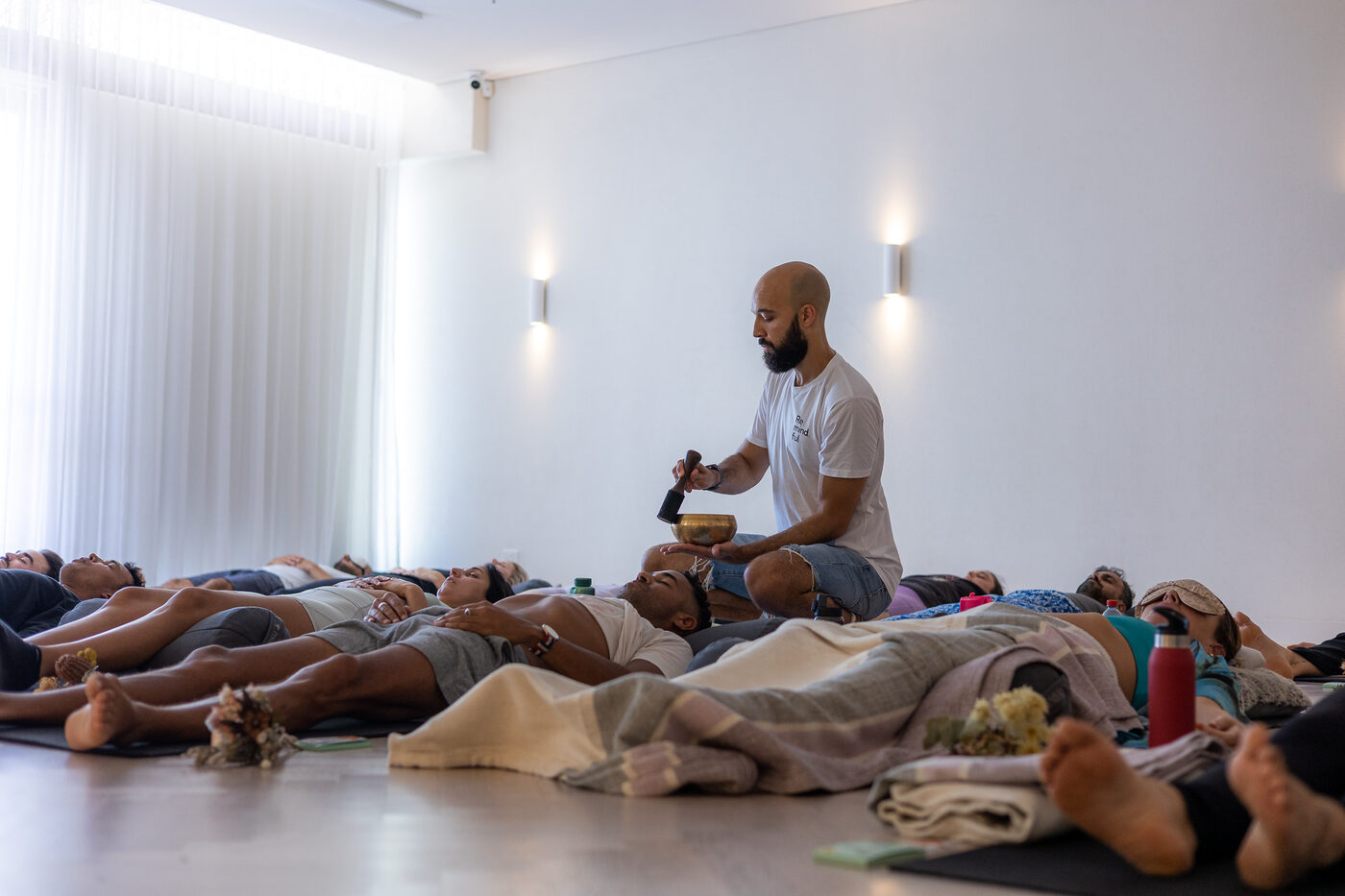
Sleep is one of the hardest things to get right, and it is also one of the most important things we do to feel good, physically and mentally. We have all felt what a bad night does to us. The catch is that there is no single fix. Plenty of people claim to solve sleep with one simple trick, but the truth is you need a blend of small signals. It starts earlier than you might think, from the moment you wake up.
Here is the full-day routine I take people through, from morning light to the breathing that helps you wind down at night.
Sleep starts the moment you wake up
A lot of how you sleep at night is set in the morning, and a big part of that is cortisol. Cortisol gets a bad reputation as the stress hormone, and yes, you want it low at night. In the morning, though, a healthy rise is exactly what helps you wake up properly. It is one of the signals that sets the body clock and helps time the melatonin release that makes you sleepy later.
The aim is simple: give your body a strong morning signal, then help your arousal naturally drift down across the rest of the day.
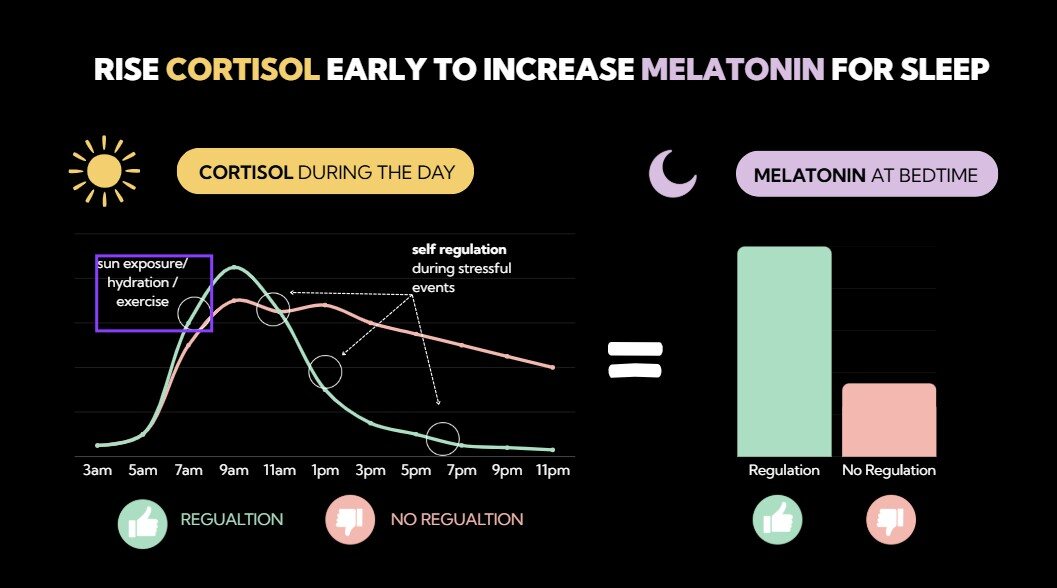
A few ways to lift that morning signal:
- Get sunlight as soon as possible. Direct outdoor light is ideal, even on a cloudy day. Get outside rather than sitting behind glass, do not wear sunglasses unless you need them, and never look directly at the sun.
- Move your body. High-intensity exercise can do it, but even a few star jumps or a brisk walk can help get your heart rate up.
- Talk to someone. A bit of conversation in the morning helps switch you on.
- Drink a decent amount of fluid. Start the day by replacing what you lost overnight.
Through the day: keep the stress from stacking up
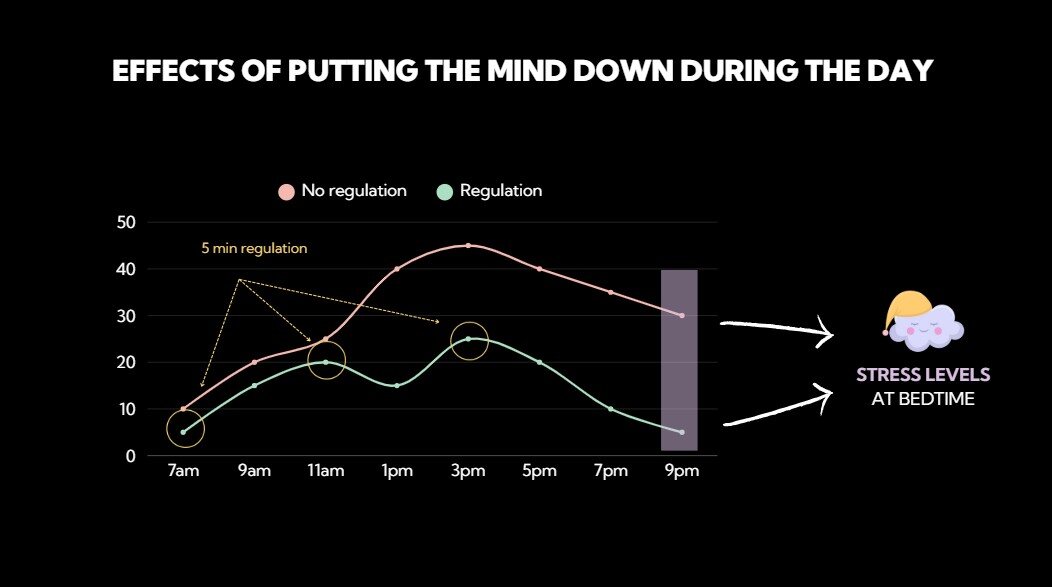
Once the morning is underway, the useful thing is not to chase a perfectly calm day. It is to notice when your stress is building and give your system short opportunities to come back down.
This is where breathwork earns its place. A quick reset like box breathing between meetings or after a stressful moment can help you return towards baseline instead of carrying every stressful moment into the evening.
You can also use a simpler pattern with a slow, comfortable exhale. Five minutes is enough to create a pause. The practice does not need to be dramatic to be useful.
Early evening: start going inward
As you get closer to evening, a short practice to shed the day can be a lovely thing. Keep it light. An evening walk is perfect. Make it gentle, and start bringing your attention to your breath while you are out there. It is the beginning of turning down and going inward.
If a guided practice helps, the Be Remindful app can tailor a practice to you, your age and your own breathing habits.
Evening light: turn it down and warm it up
Once you are into the evening, start cutting the light around the house. The main thing is simply not having everything too bright. Bright light late in the day, especially blue heavy light, is a strong signal telling your brain it is still daytime.
Red light is useful here because long-wavelength red light is gentler on your body clock than blue or white light. You will hear a lot about blue-light blocking glasses too, but be honest about them. A large review of the trials found they probably make little real difference to sleep. That does not mean cutting evening light is pointless. Dimming and warming your lights is well founded. It means the glasses themselves are not the magic bit.
I run LIFX smart bulbs set to turn red around 7:30 and off completely by about 10. You can use any warm, dim lighting that works in your home, and try to bring the number of screens down as the evening goes on.
In bed: use your breath to drop off
Once you are in bed, this is where breathing can do the heavy lifting. Keep it quiet, gentle and comfortable. The aim is to reduce effort, not to take the biggest breath you can.
Slow, light, exhale-led breathing
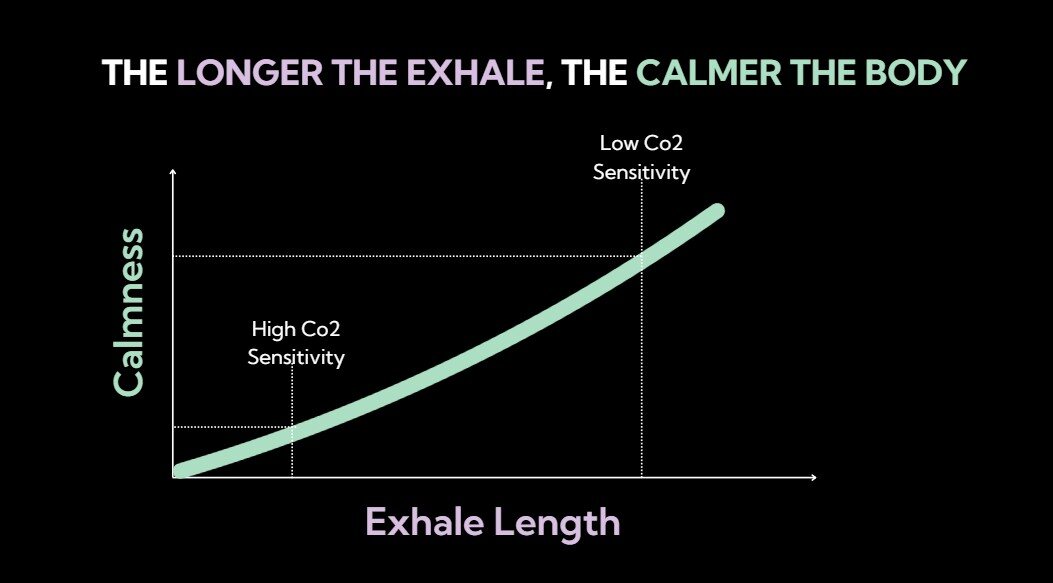
A reliable option is 4-7-8 breathing: in for four, hold for seven, out for eight. If the hold feels like too much, drop it and use a 4-8 pattern instead: in for four and a long, slow eight out. Breathe in and out very slowly and lightly, and put most of your attention on the exhale.
Long exhales are the part that tells your nervous system it is safe to begin switching off. The rhythm should feel settling, not like a test of lung capacity. If you feel air hunger or panic, make the count easier or return to normal breathing.
A small posture tweak
Tilt your pelvis a little and tuck your tailbone in slightly. You may notice that you can breathe more fully without arching your back or lifting your chest. It works whether you are on your back or your side.
Let the mind wander, then run the day like a movie
Give yourself about 60 seconds to let your mind go where it wants. Then gently walk back through your day like a short film: waking up, what you had for breakfast, your route to work, anything unusual you noticed, the conversations and meetings.
Do not get caught up in any of it. Just watch it roll past until you arrive back in bed. It is a light way of setting the day down so your mind has something calm to do instead of spinning. Think of it as letting go of the day rather than solving it.
Deepen and slow it
Start making the breath slow and comfortable, and breathe through the nose if that is easy for you. If you still feel wound up, add a small hold and a sigh: breathe in, hold for three to five seconds, then sigh it out. That long, audible exhale is the calming ingredient. The breathwork for anxiety guide covers more tools for settling an activated mind.
If you are really tense
Squeeze everything at once: hands, forearms, face and your whole body. Then release it all with a big exhale. Do it again. This is progressive muscle relaxation, a long-used way to discharge physical tension. If that is too much, shrug your shoulders up to your ears, squeeze and let them drop.
A few tools that make nasal breathing easier
Everything above leans on being able to breathe through your nose, and for a lot of people the nose is the bottleneck. A few simple things can help.
Nasal strips or dilators
Strips across the bridge of your nose, or small dilators inside the nostrils, gently hold the airway open so more air gets through. Research is strongest on how they make people feel: easier breathing, less congestion, better sleep quality and less daytime grogginess. The objective measurements are more mixed, but if a blocked or narrow nose is your problem, they are cheap, low-risk and worth trying.
A humidifier
If your room is dry from heating, air conditioning or the climate, your nose can dry out and block up. You may then mouth breathe without realising it. A humidifier keeps the air moist so your nasal passages stay comfortable and open. Keep it clean, since a neglected one can grow mould.
Mouth tape, with a caveat
The idea behind taping your lips at night is to encourage nasal breathing. It has become popular and the theory is understandable, but the evidence is weak and there is a real safety concern. If your nose is blocked for any reason, taping your mouth shut can be risky because you have closed off your backup airway.
Mouth tape only makes sense once nasal breathing is already easy, which is why nasal strips and a humidifier come first. If you snore heavily, gasp or choke in your sleep, or feel wiped out during the day, skip the tape and get checked for sleep apnea. Do not use a breathing practice to self-diagnose or treat a sleep disorder.
The order matters: open and moisten the nose first, and only then think about tape. Our guide to nose versus mouth breathing explains when each route is useful. For a complete daytime retraining plan, see how to stop mouth breathing at night.
Try it tonight
Give this a go on your next sleep. Remember that it does not start at bedtime. It starts the moment you wake up, so get outside as soon as you can.
If you like to linger in bed, use this as your excuse to get up a touch earlier and find some light, even if that just means walking to your coffee shop and doing your morning a little differently. Then let the day taper down rather than asking one breathing exercise to fix everything at 10:30 pm.
References
- Leproult, R., et al. (2001). Transition from Dim to Bright Light in the Morning Induces an Immediate Elevation of Cortisol Levels. Journal of Clinical Endocrinology & Metabolism. View source
- Mott, M., et al. (2023). The Influence of Light Wavelength on Human HPA Axis Rhythms: A Systematic Review. Life. View source
- Singh, S., et al. (2023). Blue-light filtering spectacle lenses for visual performance, sleep, and macular health in adults. Cochrane Database of Systematic Reviews. View source
- Balban, M. Y., et al. (2023). Brief structured respiration practices enhance mood and reduce physiological arousal. Cell Reports Medicine. View source
- Rhee, J., et al. (2025). Breaking social media fads: safety and efficacy of mouth taping in patients with mouth breathing, sleep disordered breathing, or obstructive sleep apnea. PLOS One. View source
- Objective and Subjective Effects of a Prototype Nasal Dilator Strip on Sleep in Subjects with Chronic Nocturnal Nasal Congestion (2019). View source
Frequently asked questions
Does morning sunlight really help you sleep at night?
Yes. Bright morning light lifts your natural morning cortisol and helps set your body clock, which in turn helps time the melatonin release that makes you sleepy at night. Getting outside early is one of the highest-value things you can do for sleep.
What is the best breathing technique to fall asleep?
Slow, light, exhale-focused breathing is a reliable place to start. 4-7-8 breathing, or a simpler 4-8 pattern without the hold, works well because the longer exhale helps your nervous system settle.
Do blue-light blocking glasses work?
The evidence is thin. A large review of the trials found they probably make little to no difference to sleep quality. Dimming and warming your evening light is better supported than relying on the glasses.
Why breathe through the nose to sleep?
Nasal breathing tends to keep the breath slower and lighter, which supports the calm state you want as you drift off. If your nose is blocked, make it comfortable first rather than forcing nasal breathing.
How early should I get sunlight?
As soon as possible after waking, ideally within the first hour. Even a cloudy day outdoors is brighter than sitting inside behind glass.
Is mouth taping safe?
Only if you can already breathe freely through your nose. The evidence is weak, and taping your mouth shut can be dangerous if your nose is blocked. If you snore heavily, gasp in your sleep or feel very tired during the day, get checked for sleep apnea rather than taping.
About the author
Daniel Augustine
Daniel is the founder of Be Remindful, a Breathless Masters Instructor and an Oxygen Advantage Advanced Instructor. He has spent fifteen years across ad tech and mindfulness, runs breathwork sessions for teams at companies including Google, Atlassian, Salesforce and Spotify, and works one-on-one with people managing anxiety, stress and performance.
Want to try breathwork for yourself?
Sessions run for individuals, private groups and workplace teams, in Sydney, Melbourne, Brisbane, Gold Coast, Adelaide and online. No experience needed.